
Postpartum Hair Loss
Accelerating natural regrowth and restoring structural density after pregnancy.
Our Approach
The postpartum period is a time of profound physical transition. While many women enjoy exceptionally thick, lustrous hair during pregnancy, the months following childbirth often bring a sudden and distressing increase in hair shedding. This condition, clinically known as postpartum telogen effluvium, is a natural physiological response to dramatic hormonal shifts. However, it does not mean you simply have to wait it out. At Pilot Medical Clinic, we provide targeted, medical-grade interventions designed to stabilize excessive shedding, correct underlying nutritional deficits, and accelerate your transition back to your natural follicular density.
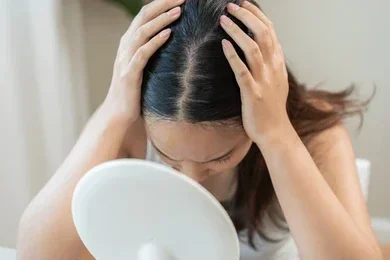
Causes of Postpartum Hair Loss
Postpartum hair loss is not true genetic hair loss; it is an interruption of the natural hair growth cycle. To effectively treat it, we must understand the precise physiological triggers:
The Estrogen Drop: During pregnancy, high estrogen levels keep your hair anchored in the active growth phase (anagen). After childbirth, estrogen levels plummet, forcing a large percentage of hair simultaneously into the resting and shedding phase (telogen).
Systemic Stress: The physical trauma of childbirth, combined with sleep deprivation and the emotional demands of early motherhood, creates significant physiological stress that further disrupts the hair cycle.
Nutritional Depletion: Pregnancy and breastfeeding draw heavily on the body’s reserves. Deficiencies in essential markers such as ferritin (iron stores), vitamin D, and specific B vitamins can severely delay natural follicular recovery.
Thyroid Fluctuations: Postpartum thyroiditis is a relatively common occurrence. An overactive or underactive thyroid in the months following birth can act as a primary catalyst for prolonged hair thinning.
Our Clinical Approach at Pilot Medical Clinic
Under the guidance of our Medical Director, Dr. Jason Lau, our clinical protocols prioritize safety—especially for nursing mothers—while actively stimulating cellular regeneration.
Our core therapeutic modalities include:
Comprehensive Diagnostic Blood Profiling: Because postpartum shedding is intrinsically linked to systemic health, our first step is precise diagnostics. We evaluate thyroid function, ferritin levels, and essential nutritional markers to ensure no underlying, correctable deficiency is prolonging your hair loss.
Targeted Nutritional Therapeutics: Based on your diagnostic profile, we provide medical-grade supplementation to rebuild the internal reserves necessary for robust cellular turnover and healthy keratin production.
Advanced Scalp Bio-Remodeling: The strategic micro-injection of essential polynucleotides, vitamins, and targeted nutrients directly into the dermis. This highly effective treatment bypasses systemic absorption to deliver pure nourishment directly to the follicle, reducing local inflammation and signaling dormant hairs to re-enter the growth phase.
Low-Level Light Therapy (LLLT): A completely safe, non-invasive, and non-chemical treatment utilizing highly calibrated light energy. LLLT stimulates cellular metabolism within the scalp, increasing blood flow and fortifying the structural integrity of the newly emerging hair shafts.
Find out more about Stressed Induced Hair Loss, Male Pattern Hair Loss, Female Pattern Hair Loss
Expertly reviewed by the Pilot Medical Team.
Any Questions?
-
Excessive shedding typically begins around 2 to 4 months after childbirth. For most women, the shedding peaks and then naturally begins to taper off by the time their baby is 6 to 9 months old. However, without intervention, full restoration of your original density can take over a year.
-
No. Postpartum telogen effluvium is a temporary condition. The hair follicle is not permanently damaged or miniaturized (as seen in genetic hair loss); it is simply stuck in a resting phase. Our clinical protocols are designed to aggressively shorten this resting phase and stimulate active regrowth.
-
Patient safety is our absolute priority. While certain oral medications and highly concentrated topical solutions are contraindicated during lactation, therapies such as Low-Level Light Therapy (LLLT), specific nutritional optimization, and superficial bio-remodeling are entirely safe and highly effective for nursing mothers. Dr. Lau will customize your protocol to perfectly align with your current postpartum stage.
-
Because the estrogen drop after childbirth is a necessary physiological process, the initial shift into the shedding phase cannot be entirely prevented. However, by optimizing your scalp health and systemic nutrition early on, we can significantly reduce the severity of the shedding and dramatically speed up the regrowth process.
Accelerate Your Follicular Recovery
You do not have to wait passively for your hair to recover. Schedule a comprehensive consultation with our medical team to evaluate your post-pregnancy hair loss and design a customized, safe recovery protocol.