
Stress-Induced Hair Loss
Interrupting the shedding cycle and restoring dermal equilibrium.
Our Approach
Severe physiological or emotional stress does more than impact your mental well-being; it can fundamentally disrupt your body's cellular rhythms. One of the most common physical manifestations of acute stress is a sudden, dramatic increase in hair shedding, clinically known as Telogen Effluvium. At Pilot Medical Clinic, we approach stress-induced hair loss as a temporary systemic disruption. By identifying the specific physiological triggers and deeply nourishing the scalp environment, we stabilize excessive shedding and accelerate the return of your natural follicular density.
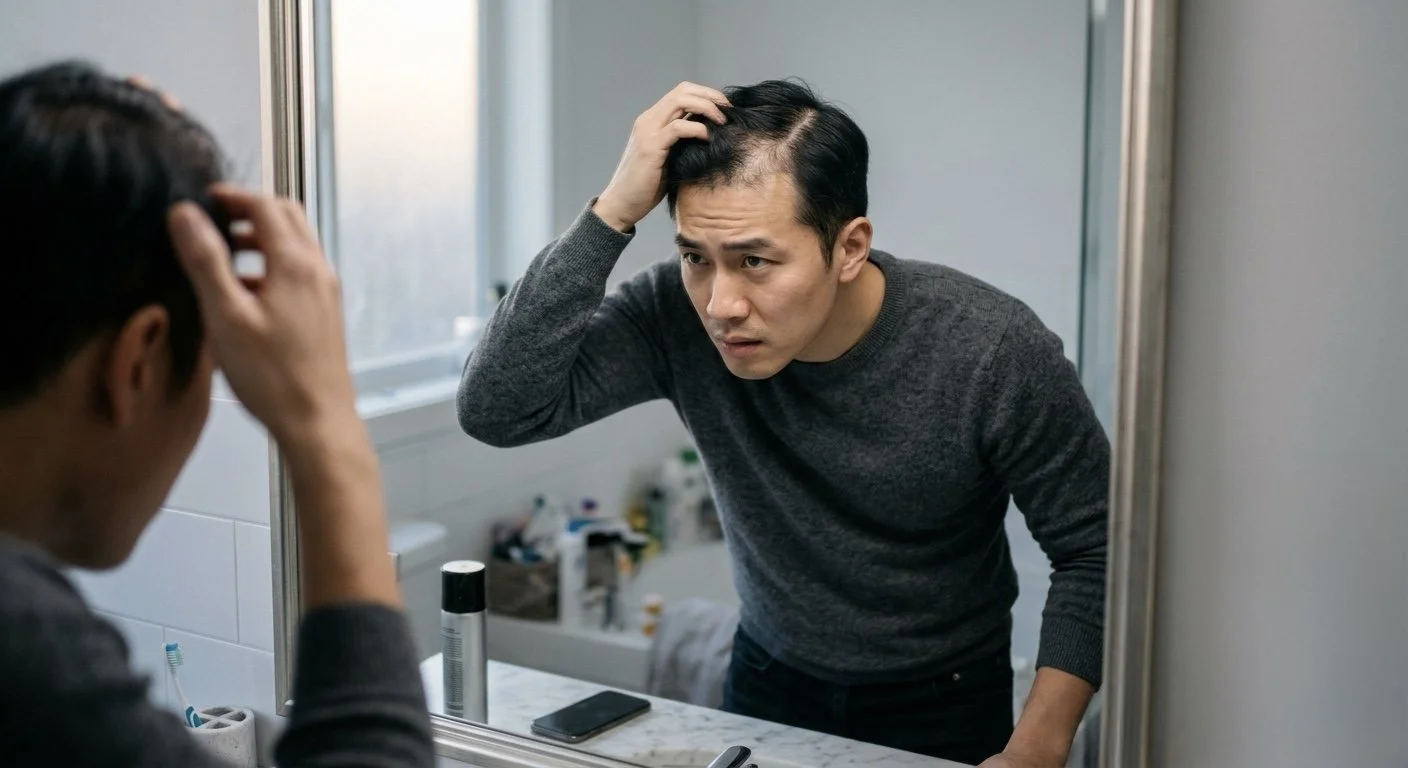
Understanding Stress-induced Hair Loss
To understand stress-induced hair loss, it is essential to look at the natural hair growth cycle. Unlike genetic hair loss (which involves a gradual shrinking of the follicle), Telogen Effluvium is characterized by an abrupt shift in the hair cycle phases:
The Telogen Shift: A severe systemic shock—such as major surgery, severe illness, rapid weight loss, or intense psychological trauma—causes a spike in cortisol and redirects the body’s resources away from non-essential functions like hair growth. This prematurely forces up to 30-50% of your hair follicles from the active growth phase (anagen) directly into the resting and shedding phase (telogen).
The Delayed Reaction: Because the resting phase lasts for several months, the actual shedding does not occur immediately. Patients typically experience profound hair fall 2 to 3 months after the triggering stressful event has occurred.
Diffuse Thinning: Unlike pattern baldness, which recedes the hairline or specifically targets the crown, stress-induced hair loss typically presents as an overall, diffuse thinning across the entire scalp.
Our Clinical Approach at Pilot Medical Clinic
Under the expert guidance of our Medical Director, Dr. Jason Lau, our clinical protocols are designed to aggressively shorten the resting phase of the affected hair follicles and create an optimized environment for rapid, robust regrowth.
Our core therapeutic modalities include:
Comprehensive Diagnostic Blood Profiling: Because stress often depletes the body of essential nutrients, our first step is precision diagnostics. We evaluate vital markers such as ferritin (iron), vitamin D, B vitamins, and thyroid function to ensure no secondary deficiencies are compounding the shedding.
Advanced Scalp Bio-Remodeling: The strategic micro-injection of essential polynucleotides, vitamins, and cellular growth factors directly into the dermis. This protocol bypasses the digestive system to deliver pure, concentrated nourishment straight to the compromised follicles, reducing local inflammation and signaling them to re-enter the active growth phase.
Low-Level Light Therapy (LLLT): Utilizing highly calibrated, non-thermal light energy to stimulate cellular metabolism within the scalp. This increases local microcirculation, delivering the oxygen and nutrients necessary to fortify the structural integrity of the newly emerging hair shafts.
Targeted Medical Therapeutics: Depending on the severity of the shedding, customized topical formulations may be prescribed to temporarily anchor the hair and stimulate faster cellular turnover.
Find out more about Female Pattern Hair Loss, Male Pattern Hair Loss, Postpartum Hair Loss
Expertly reviewed by the Pilot Medical Team.
Common questions Answered
-
No. Telogen Effluvium is a self-limiting, temporary condition. The hair follicle itself remains structurally sound and healthy; it has simply been forced into a state of hibernation. Once the underlying stressor is resolved and the scalp is adequately supported, the hair will regrow.
-
Without clinical intervention, the acute shedding phase typically lasts for 3 to 6 months before gradually tapering off. Complete restoration of your original density can take 12 to 18 months. Our clinical protocols are specifically designed to significantly condense this timeline.
-
While the volume of hair fall can be deeply alarming (often noticed in the shower drain or on your pillow), Telogen Effluvium rarely causes complete baldness. It causes a noticeable, diffuse decrease in overall hair volume and density.
-
Pattern hair loss is progressive, genetic, and caused by hormonal sensitivity (DHT) that permanently shrinks the follicle over time. Stress-induced hair loss is sudden, non-genetic, and represents a temporary pause in the growth cycle without permanently damaging the follicle.
Accelerate Your Cellular Recovery
You do not have to wait a year to regain your natural hair volume. Schedule a comprehensive consultation with our medical team to accurately diagnose your shedding and design a tailored stabilization and regrowth protocol.