
Melasma Management
Targeted clinical protocols to lift stubborn pigmentation and restore dermal clarity.
Our Approach
Melasma is a complex, chronic pigmentary condition characterized by symmetrical, blotchy, brownish or grayish patches. Typically appearing on the cheeks, forehead, nose, and upper lip, melasma extends deeper than superficial sun damage. At Pilot Medical Clinic, we understand that melasma is highly sensitive to internal and external triggers, requiring a sophisticated and conservative medical approach to safely restore an even, luminous complexion.
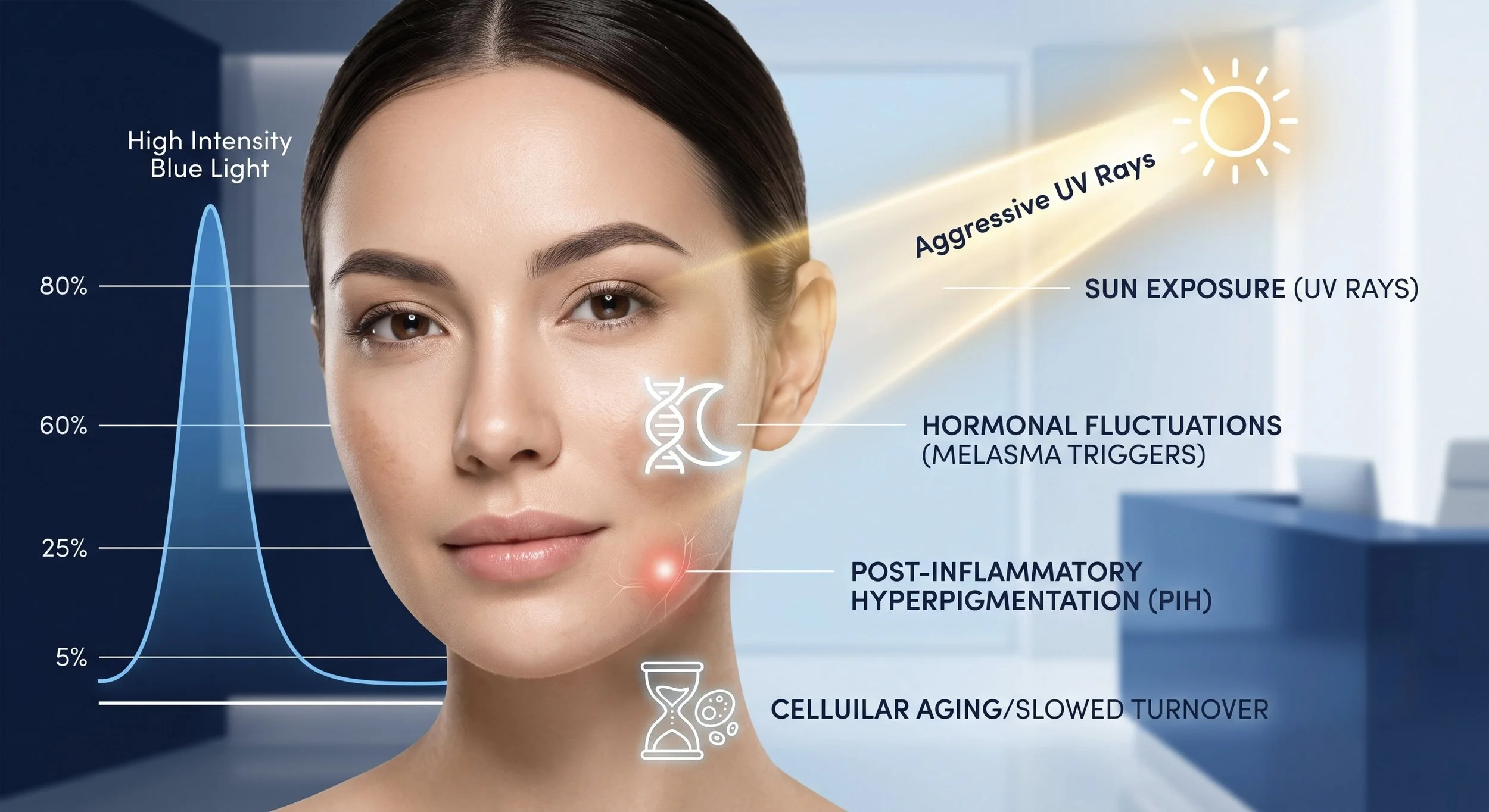
Understanding the Triggers
Unlike standard hyperpigmentation, melasma is deeply rooted in the skin's cellular behavior and can be provoked by several overlapping factors. Effective management begins with identifying your specific triggers:
Hormonal Fluctuations: Often referred to as the "mask of pregnancy" (chloasma), melasma is heavily influenced by hormonal shifts associated with pregnancy, oral contraceptives, and hormone replacement therapy.
UV and Visible Light Exposure: Unprotected exposure to the sun’s ultraviolet rays—and even high-energy visible (HEV) blue light from screens—can stimulate melanocytes to overproduce pigment.
Thermal Aggressors (Heat): Intense heat from the climate, saunas, or aggressive thermal laser therapies can exacerbate melasma by inducing dermal inflammation.
Genetics: A family history of melasma significantly increases an individual's susceptibility to the condition.
Our Clinical Approach at Pilot Medical Clinic
Because melasma is notoriously sensitive to heat and aggressive interventions, it demands a highly calibrated, medical-grade approach. Led by our Medical Director, Dr. Jason Lau, our treatment philosophy focuses on suppressing melanocyte activity and lifting existing pigment without triggering rebound hyperpigmentation.
Our customized therapeutic modalities include:
Advanced Pico Laser Therapy: Utilizing ultra-short picosecond technology to safely shatter deep dermal pigment into microscopic particles. This process minimizes heat generation, ensuring safe and effective clearance for melasma-prone skin.
Prescription Therapeutics: We prescribe clinically proven topical agents (such as tyrosinase inhibitors) and oral medications (like Tranexamic Acid) to suppress melanin production at the cellular level.
Clinical Exfoliation (Chemical Peels): Controlled, medical-grade chemical peels designed to accelerate cellular turnover and lift superficial epidermal pigment safely.
Dermal Hydration & Skin Boosters: Targeted injectables that repair the skin barrier, reduce localized dermal inflammation, and create an optimized environment for healthy cellular function.
The Singapore Context - In Singapore’s high-UV index environment, protecting and maintaining clear skin requires diligent, ongoing care. Our protocols not only treat existing pigmentation but also focus heavily on barrier fortification and UV defense, ensuring your clinical results are sustained despite the challenging equatorial climate.
Find out more about Pigmentation, Dull Skin, Dry Skin, Glass Skin, Loose Skin, Skin Longevity
Expertly reviewed by the Pilot Medical Team.
Any Questions?
-
Sun spots (solar lentigines) are typically isolated, distinct spots caused directly by UV damage. In contrast, melasma presents as symmetrical, patchy discoloration and is heavily influenced by systemic hormones and heat, making it a more complex condition to treat.
-
Melasma is considered a chronic condition. While clinical treatments can successfully clear the visible pigmentation and dramatically improve skin tone, there is always a risk of recurrence. Our objective at Pilot Medical Clinic is to achieve long-term clearance and establish a robust maintenance protocol to suppress future flare-ups.
-
Yes, provided the correct technology and clinical parameters are applied. Traditional heat-based lasers can worsen melasma by triggering inflammation. We utilize advanced, low-heat technologies like Pico lasers, precisely calibrated to shatter pigment without inducing thermal damage.
-
Treating melasma requires consistency and patience. While subtle brightening may be noticed within the first few weeks, significant clearance generally takes 8 to 12 weeks of dedicated clinical treatment, coupled with strict adherence to at-home skincare and sun protection.
Begin Your Skin Restoration Journey
Managing melasma requires precision, expertise, and a tailored medical strategy. Schedule a comprehensive consultation with our clinical team to map out your definitive pigment-correction protocol.