Pigmentation & Skin Tone Clarification
Restoring luminosity and uniform tone to sun-damaged and aged skin.
Our Approach
Pigmentation is a complex dermatological concern, often presenting as stubborn, uneven dark patches that detract from the skin's natural vitality. At Pilot Medical Clinic, we approach hyperpigmentation with clinical precision. We understand that effective treatment requires more than surface-level brightening; it necessitates a deep understanding of melanin production and cellular turnover to restore a clear, balanced, and luminous complexion.
Classifying Your Pigmentation Profile
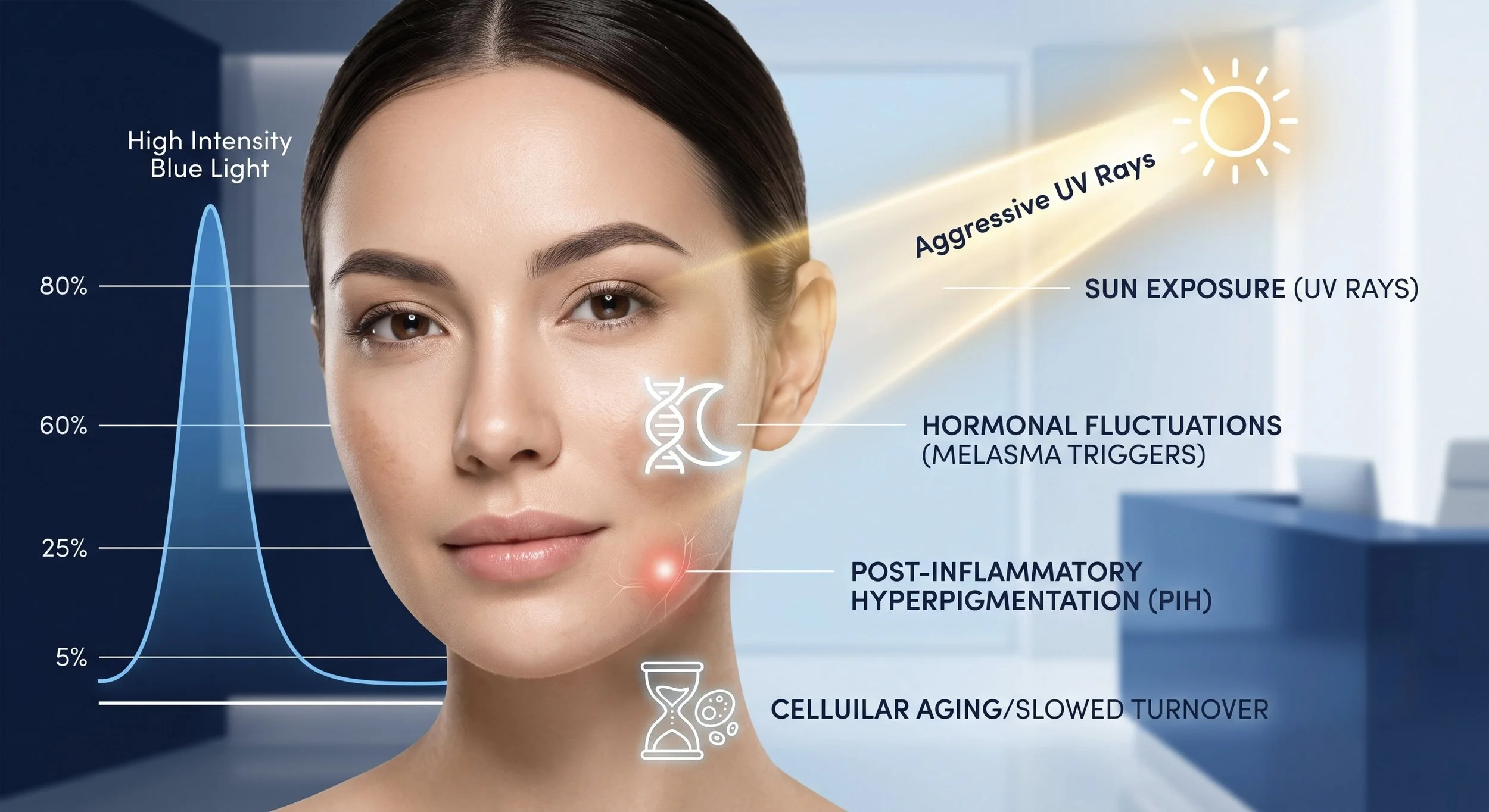
Not all dark spots are created equal. Accurate diagnosis is the cornerstone of our treatment philosophy. We commonly classify and treat the following variations:
Melasma: Often hormonally driven, presenting as symmetrical, brown or greyish patches on the cheeks, forehead, and upper lip. It is notoriously stubborn and sensitive to heat.
Solar Lentigines (Sun Spots): Distinct, well-defined dark spots that appear on areas with the most sun exposure, such as the face, hands, and décolletage.
Post-Inflammatory Hyperpigmentation (PIH): Flat spots of discoloration left behind after an inflammatory event, such as an acne cyst, abrasion, or burn.
Ephelides (Freckles): Small, clustered spots that typically darken during sun exposure and fade in the winter, heavily influenced by genetics.
Causes of Hyperpigmentation
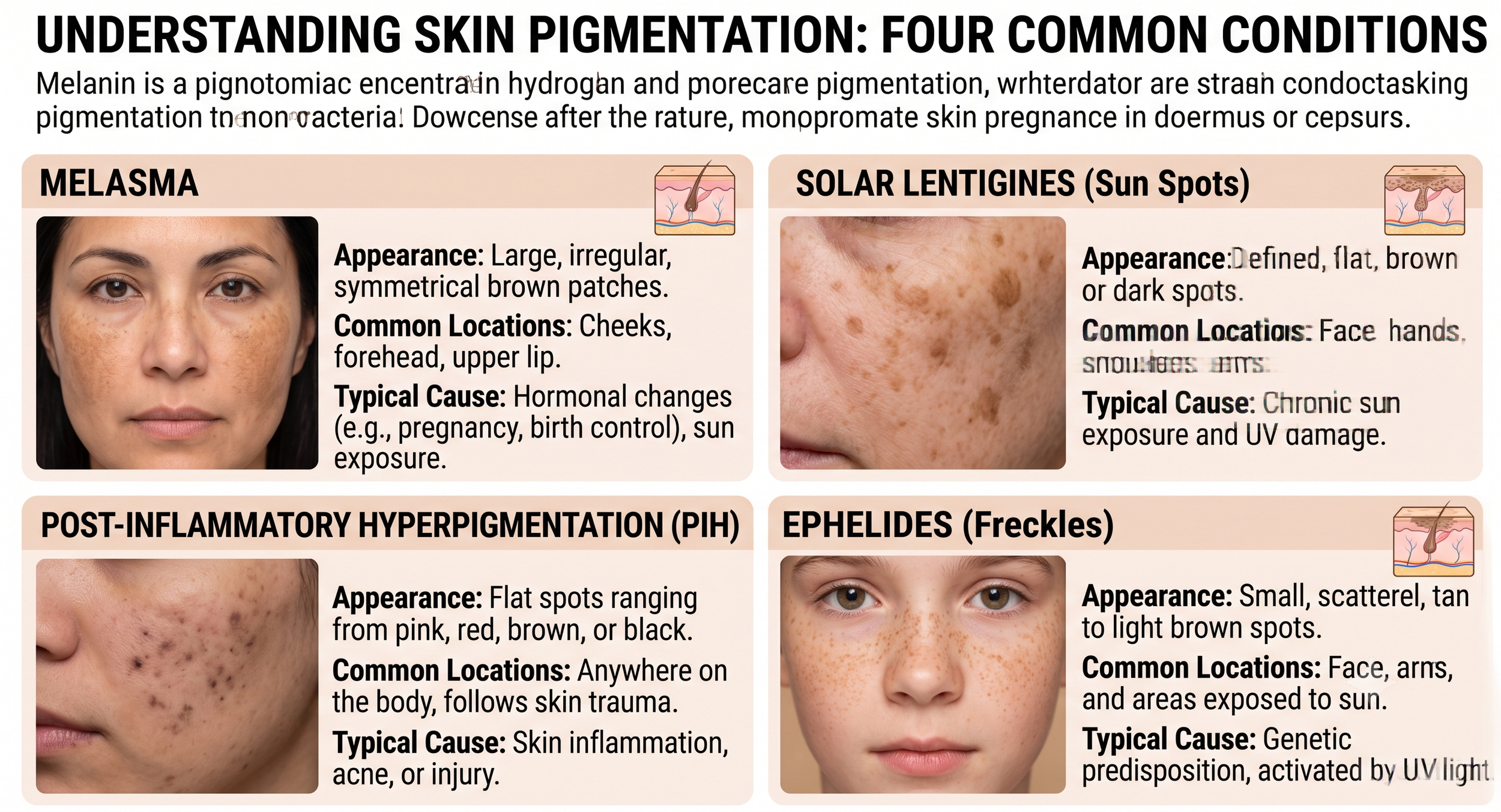
Hyperpigmentation occurs when melanocytes—the cells responsible for skin color—become overactive and produce excess melanin. This overproduction is typically triggered by a combination of factors:
UV Exposure: Chronic, unprotected exposure to the sun is the primary catalyst for most pigmentary disorders.
Hormonal Fluctuations: Changes in systemic hormones (often due to pregnancy, oral contraceptives, or thyroid imbalances) can trigger deep-seated pigmentation.
Inflammation: Trauma to the skin, such as acne breakouts, aggressive treatments, or eczema, can result in localized darkening as the skin heals.
Chronological Aging: As cellular turnover slows with age, accumulated sun damage and environmental stress begin to surface.
Clinical Solutions at Pilot Medical Clinic
Led by our Medical Director, Dr. Jason Lau, our clinical protocols are designed to target excess melanin at various dermal depths while preserving the integrity of the surrounding tissue.
Advanced Pico Laser Technology: Utilizing ultra-short picosecond pulses to safely shatter pigment particles into microscopic fragments, allowing the body's immune system to naturally clear them away. This process minimizes heat delivery, making it exceptionally safe and effective for Asian skin types.
Clinical Peels: Formulated to accelerate cellular turnover, these peels gently exfoliate the superficial layers of skin where stubborn, surface-level pigment resides.
Prescription Therapeutics: We frequently integrate topical tyrosinase inhibitors (to block new melanin production) and oral medications to manage complex, systemic conditions like melasma from within.
Targeted Skin Boosters: Injectable formulations designed to hydrate the dermis, reduce localized inflammation, and suppress hyperactive pigment cells at their source.
The Singapore Context - In Singapore’s high-UV index environment, protecting and maintaining clear skin requires diligent, ongoing care. Our protocols not only treat existing pigmentation but also focus heavily on barrier fortification and UV defense, ensuring your clinical results are sustained despite the challenging equatorial climate.
Find out more about Melasma, Dull Skin, Dry Skin, Glass Skin, Loose Skin, Skin Longevity
Expertly reviewed by the Pilot Medical Team.
Any Questions?
-
While conditions like sun spots and PIH can often be cleared completely, hormonally driven pigmentation like melasma is considered a chronic condition. Our objective is to clear the visible pigment and suppress future flare-ups, which requires an ongoing maintenance strategy and rigorous sun protection.
-
This is a common misconception. Advanced laser therapies, when calibrated correctly by a medical professional, do not thin the skin. In fact, the localized energy stimulates collagen and elastin production, which can strengthen and thicken the dermal layer over time.
-
You may notice a subtle brightening within the first week after your initial treatment. However, significant pigment clearance usually becomes visible after 3 to 4 weeks, as your body's immune system progressively eliminates the shattered melanin particles.
-
Treatment timelines vary significantly based on the depth and classification of your pigmentation. Superficial sun spots may require only 1 to 3 sessions, while deep dermal melasma typically requires a longer-term protocol of 5 to 10 sessions spaced several weeks apart.
-
Our laser treatments are highly tolerable, often described as a mild, warm prickling sensation. For patient comfort, we apply a clinical-grade topical anesthetic prior to the procedure. Post-treatment, you may experience mild redness that typically subsides within a few hours.
Restore Your Luminous Complexion
Uneven skin tone requires a sophisticated, customized medical approach. Schedule a detailed assessment with our clinical team to map out your definitive pigment-correction protocol.